The Feeling-Journey at the Beethovenfest
18. September 2025
#concert experience design
The "Feeling" Listener Journey – When Music Becomes Inner Movement!
On September 18, 2025, at the opening of the Shostakovich Cycle with the Jerusalem Quartet during the Beethovenfest, Plato's idea of the interplay of the three soul forces "thinking, feeling, and willing" came alive in a special way through our Experience Design format. Listeners could choose which of these three "approaches" would shape their concert experience.
The "Feeling" Journey was conceived and guided by Christian Siegmund, together with Lina Pistorius from the Beethovenfest team. This extraordinary journey focused on silence and its significance for perceiving music. A dedicated space, separate from the concert hall, was set up especially for this Journey, to create a safe space for an exceptional sensory experience.
The focus of the Feeling Journey was on perceiving the various human senses, some amplified and others removed to intensify individual senses: hearing, sight, taste, touch, sense of movement, inner, social, and emotional perception. The goal was to enable a "different kind of listening" through this sensitization.
The five phases of the Feeling Journey
1. Sight, sense of movement
45 minutes before the actual concert, participants entered the Feeling Room. They put on noise-cancelling headphones and immersed themselves in silence. No chatter, no sounds – just breath, heartbeat, mindfulness. Each person received a hand mirror and was invited to step through a door outside, walking backwards to perceive sensory impressions and details.
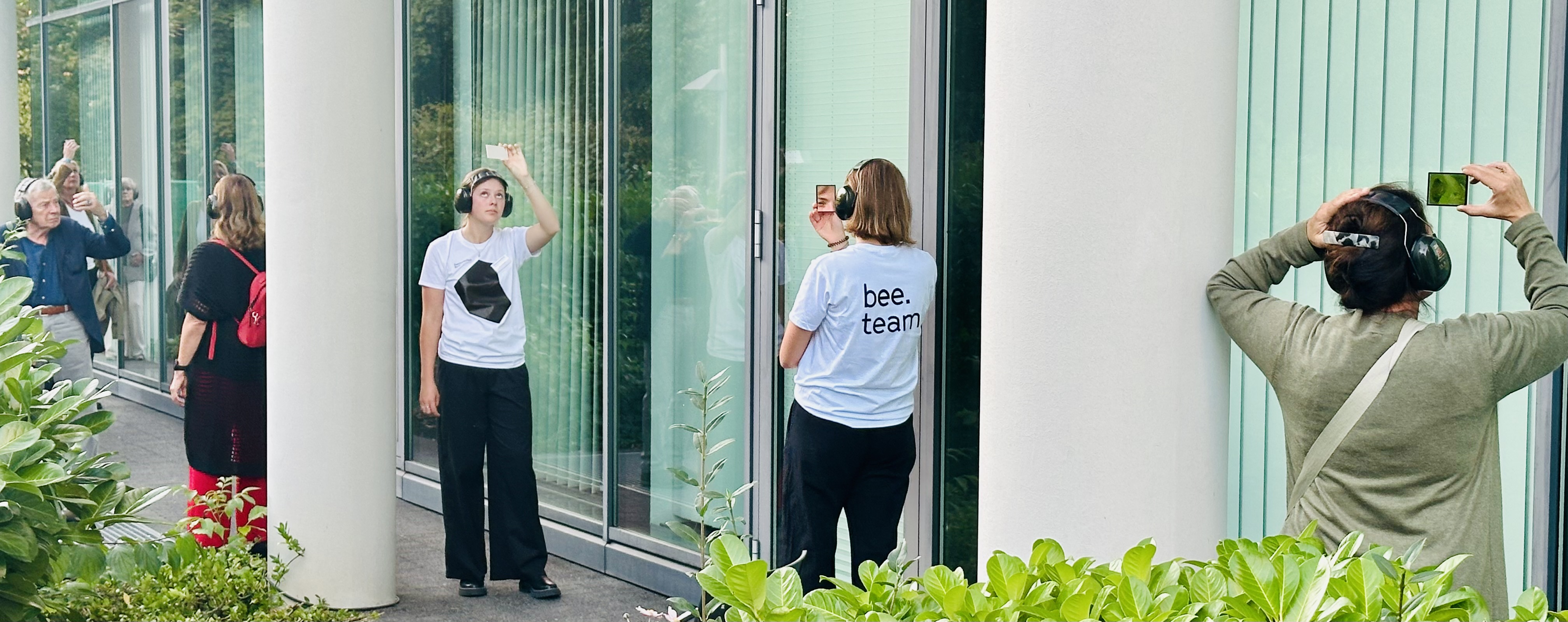
Reflexion und Stille statt Champagner und Gewusel - vor dem Konzert auf dem Weg zum Anders Hören.
2. Hearing, inner perception
In the first half of the concert, participants – now without headphones and with "fresh" hearing - were told to pay special attention to the silence and pauses in the music, to what lies between the notes.
3. Taste, touch
During the 20-minute intermission, participants received headphones again along with a glass of water, which they were to drink slowly, sip by sip, throughout the entire break.
4. Hearing, inner perception
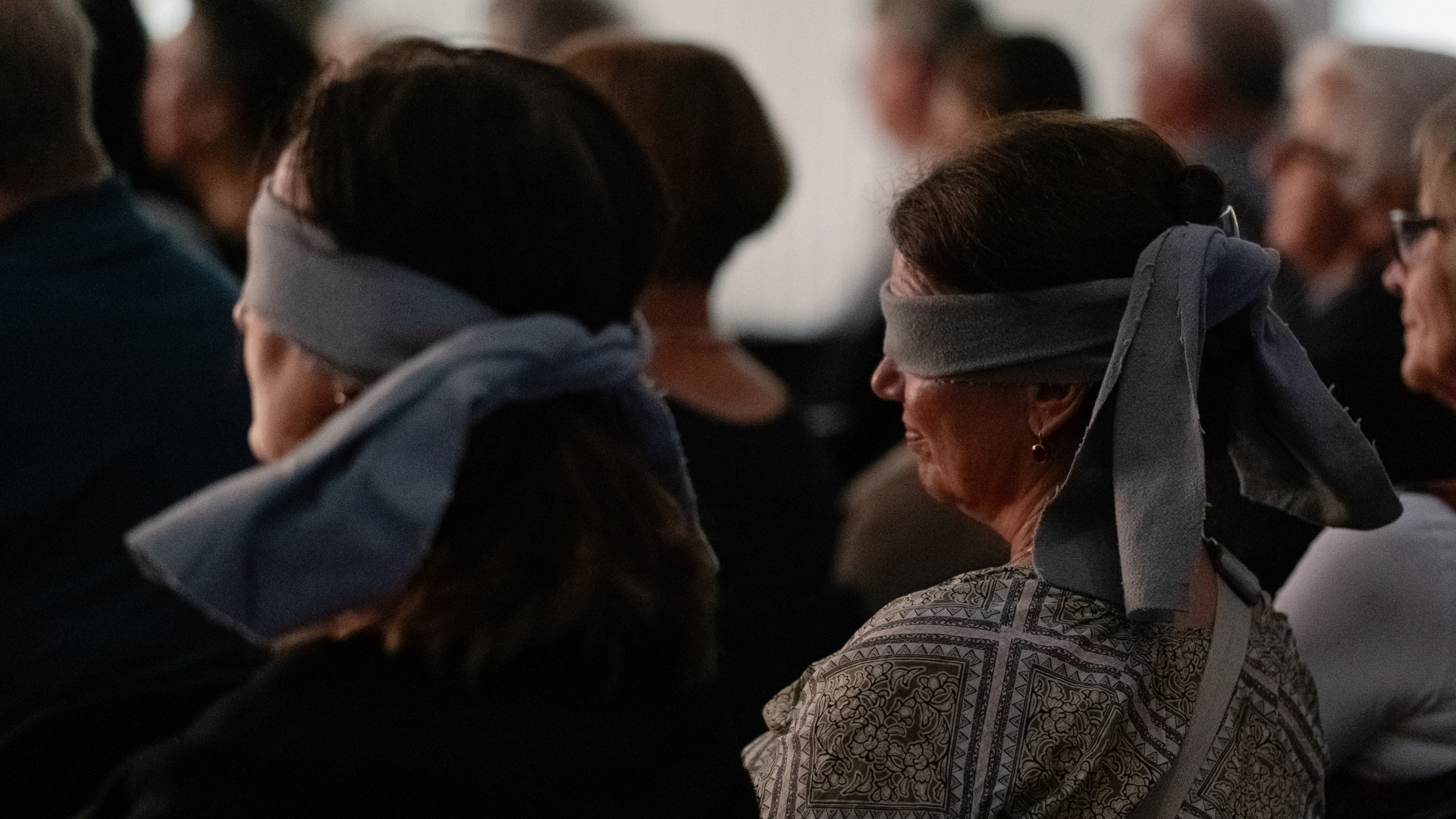
In the second half of the concert, participants exchanged the headphones for a blindfold and directed their "blind" attention to how music sounds without visual stimuli.
5. Sight, touch, social-emotional perception
After the concert, participants returned to the "Feeling Room" and sat facing each other in pairs, looking into each other's eyes for 15 minutes.
After this moving and intense emotional journey, participants documented their impressions and sensations in written feedback. The responses expressed deep gratitude and quiet amazement: about pausing, listening intently, surrendering control. Many experienced silence as a soothing space, a place where darkness turned into sound and perception into movement. Blind listening opened new depths; slow attunement to the moment created closeness – to oneself, to others, to the music.
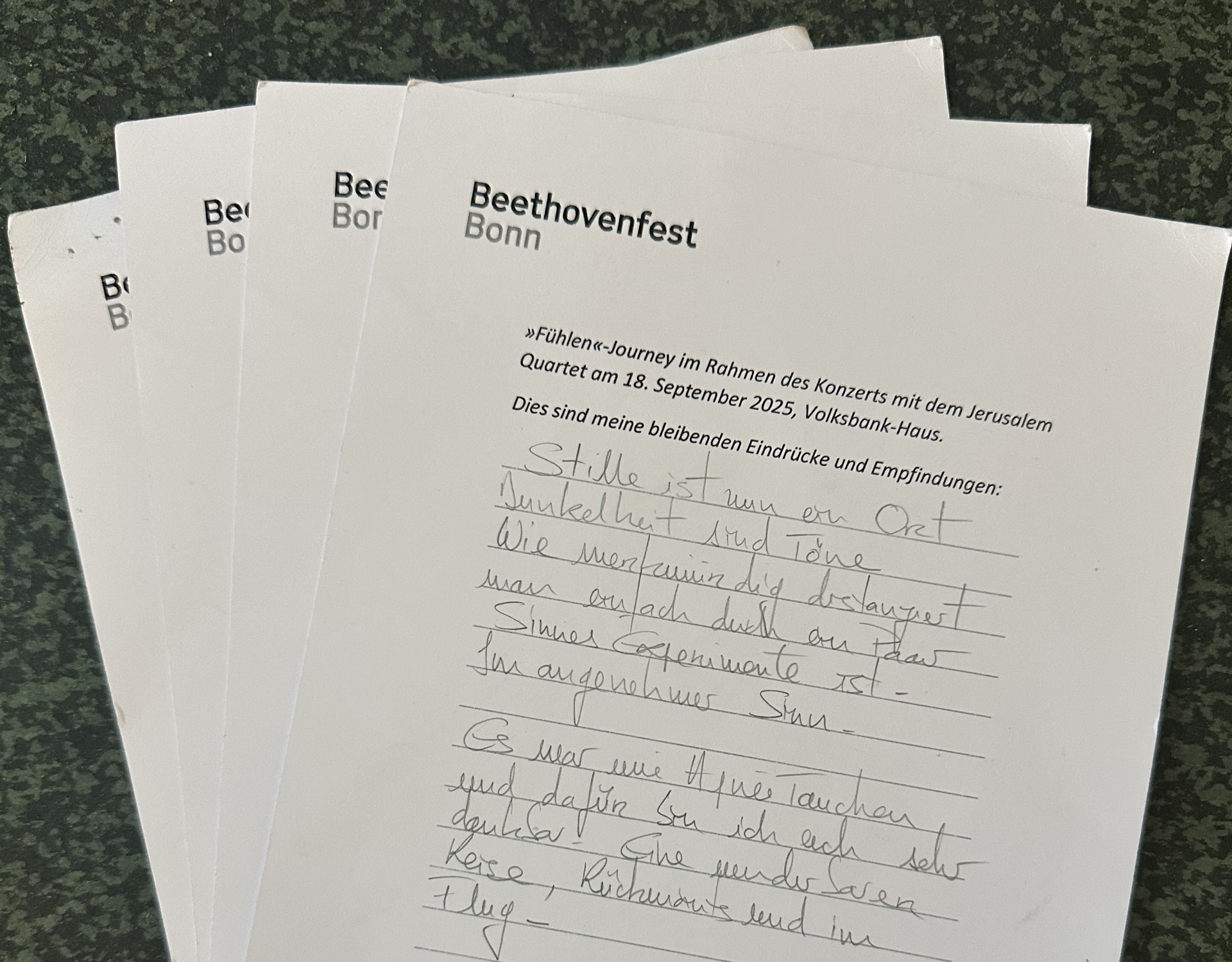
„Stille ist nun ein Ort, Dunkelheit sind Töne.“ Rückmeldung einer Teilnehmerin der Fühlen-Journey.
Thus, this "Feeling" Journey became for many a quiet but powerful voyage: into the inner self, backwards and then forward in flight – an experience that resonates and calls for repetition.